
For a Philadelphia-area school district, transportation is more than assigning vehicles to routes. It affects arrival times, attendance, family communication, staffing, and the daily coordination of neighborhood, magnet, charter, and specialized programs. When routes change or public transit becomes crowded, administrators need a transportation plan that can adapt without disrupting the school day.
Professional school district transportation philadelphia partners help by supplying dependable buses, shuttles, experienced chauffeurs, live dispatch support, and scalable logistics for regular service, overflow needs, field-based programming, and time-sensitive schedule changes. This support gives districts a practical way to supplement existing transportation resources while keeping reliability and student safety at the center.
That work begins with understanding the moving parts behind a district transportation program, from route coverage and vehicle capacity to the different needs of students and schools. The right operating model can then match each requirement with an appropriate vehicle, staffing plan, and communication process.
Ready to plan dependable transportation for your district? Contact Ace Limousine & Airport Service to discuss your school district and shuttle needs.
What Does School District Transportation in Philadelphia Involve?
School district transportation is a coordinated service designed to move students safely and consistently between homes, schools, programs, and scheduled activities. In Philadelphia, that work can include daily home-to-school routes, transportation for field trips, athletic events, and specialized programs that do not follow a standard neighborhood-school schedule.
The scale of the local system illustrates why careful planning matters. The School District of Philadelphia’s Office of Transportation administers service contracts for more than 2,100 bus and cab/van routes each day. Working with 18 contractors across 22 garage locations. Those services support public, non-public, and charter schools, as well as early intervention programs. The district’s transportation office coordinates a network that must account for route assignments, vehicle availability, timing, and changing student needs.
Daily home-to-school routes
Routine transportation begins with dependable morning pickups and afternoon returns. Planners must consider school start and dismissal times, approved pickup locations, vehicle capacity, traffic conditions, and the distance between multiple stops. A route that works during one part of the school year may need adjustment when enrollment, school schedules, construction, or program assignments change.
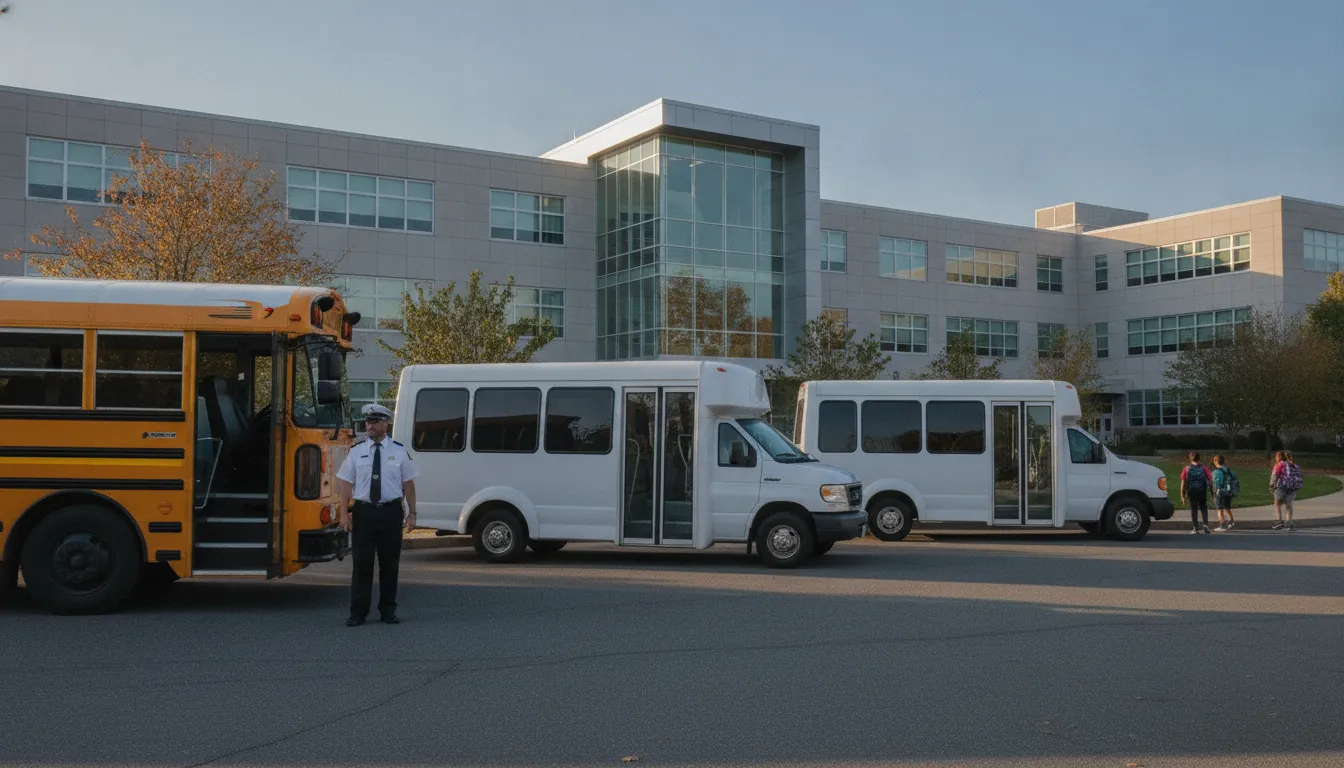
Depending on the student’s grade, route, and program, service may involve a conventional yellow school bus or another vehicle type. The objective remains the same: provide a predictable connection between the student’s approved location and the school day.
Trips, activities, and specialized routes
Transportation requirements extend beyond the regular bell schedule. Field trips may require timed departures, multiple vehicles, staging at a campus, and a coordinated return. Athletic events and academic programs can create evening or weekend transportation needs. Specialized routes may also require closer attention to individual accommodations, passenger supervision, accessibility, and communication with school staff.
For administrators coordinating several moving pieces, an experienced provider can supplement existing resources with professional transportation services. A structured operating plan should define pickup and drop-off procedures, points of contact, contingency communication, and the vehicle requirements for each assignment. That preparation helps schools manage transportation as an operational system rather than a series of last-minute trips.
Why Do Philadelphia School Districts Partner With Professional Transportation Companies?
School transportation decisions sit at the intersection of student access, daily operations, and public accountability. Philadelphia’s plan to restore SEPTA school transportation service through an operating subsidy illustrates how districts may use transit partnerships to supplement available transportation capacity. The same announcement noted that service would be augmented on routes serving significant numbers of students to reduce crowding and pass-ups. Read the City’s transportation announcement.
Public transit can be an important part of a district’s transportation network, but it may not address every route, schedule, or student need. Research on Philadelphia school choice found that students attending out-of-catchment schools may face longer or more complicated commutes, particularly when they depend on public transit. The research also connects commute time and complexity with attendance, academic achievement, school engagement, and health factors related to sleep. Review the ERIC research on student commutes.
Reliability for changing school schedules
A professional transportation company gives district planners another operational layer when routes, bell schedules, field-based learning, testing days, or specialized programs create demand outside a standard transit pattern. Instead of asking administrators to coordinate every vehicle issue themselves, a dedicated operations team can manage assignments, timing, communication, and adjustments. This makes it easier to respond when a route needs additional capacity or when a school serves students from multiple parts of the Philadelphia region.
Scalable vehicles and trained chauffeurs
District requirements can vary from a small administrative movement to coordinated service for multiple schools. Ace’s full-service fleet includes executive sedans through 56-passenger motor coaches, supporting transportation planning for different group sizes. Its PAX-certified professional chauffeurs bring specialized training and a consistent service standard. And a 24/7 live dispatch center provides human oversight when plans change during the day or after regular office hours. Districts can also review the modern coach fleet when evaluating vehicle options.
For school district transportation in Philadelphia, the value of a professional partner is not simply supplying another vehicle. It is adding a reliable, scalable, and accountable coordination resource that can work alongside public transit and existing district arrangements.
How Do School Bus and Shuttle Logistics Support Students in Philadelphia?
Transportation planning affects more than the trip between a student’s home and school. When routes are crowded, delayed, or difficult to navigate, students may face missed connections, longer commutes, and less predictable arrival times. Philadelphia has taken steps to augment routes serving significant numbers of students, specifically to reduce crowding and pass-ups on public transit. A coordinated private shuttle can provide another layer of operational support when district needs exceed the capacity or flexibility of a regular route.
How Can Specialized Student Transportation Reach More Programs?
School choice and specialized programming can spread students across a larger service area. Arts, science, and magnet programs may draw students from outside a neighborhood catchment, creating transportation patterns that do not fit a simple home-to-school route. A district may need timed pickups, staggered departures, or vehicles assigned to a smaller program rather than a standard bell schedule. Professional dispatchers can coordinate those details with school administrators, monitor changes, and keep transportation plans aligned with the day’s academic schedule.
Specialized support may also be necessary for students whose needs are not well served by conventional routes. Private providers such as EverDriven describe alternative student transportation for students with disabilities, students experiencing homelessness, students in foster care, and early-childhood students. These services illustrate why district planning should account for individual access requirements, supervision expectations, and consistent communication, not just vehicle capacity.
What Role Do Shuttles Play in Field Trips and Athletic Events?
Field trips, academic competitions, and school activities create transportation needs outside the normal route network. A provider can schedule departures around class periods, coordinate multiple pickup points, and maintain a clear return plan for faculty and administrators. The same approach helps when several schools share a destination or when a program needs transportation at different times throughout the day.
A district’s transportation plan should connect vehicles, drivers, dispatch, and school contacts into one accountable process. Ace supports Philadelphia-area organizations with fleet options ranging from executive vehicles to 56-passenger motor coaches, plus logistics planning for groups from 2 to 10,000+ passengers. For districts evaluating shuttle logistics, that combination can make supplemental service easier to schedule, communicate, and adjust as student needs change.
What Should Districts Look for in a Philadelphia School Transportation Provider?
A school transportation provider should be evaluated as an operational partner, not simply a source of vehicles. District administrators need dependable scheduling, clear communication, and a fleet that can serve different transportation needs throughout the academic year. A practical review should cover the following areas.
Does the fleet match the district’s changing needs?
Look for a modern, well-maintained fleet with multiple vehicle classes. Executive sedans may suit administrators, visiting educators, or small student groups, while larger movements may require shuttle vehicles or motor coaches. Ace’s full-service fleet ranges from executive sedans to 56-passenger motor coaches, giving districts options for daily movements, field trips, academic programs, and athletic events.
Capacity also matters when transportation needs expand beyond one school or route. A provider should be able to explain how it handles simultaneous departures, arrival windows, vehicle substitutions, and larger district-wide movements. Ace supports logistics for groups ranging from 2 to 10,000+ passengers, allowing planners to evaluate one transportation partner for both smaller assignments and complex programs.
| Vehicle type | Common use | Best fit |
|---|---|---|
| Executive sedan | Small student or staff movements, administrator travel | Transporting individuals or small groups across the district |
| Shuttle vehicle | Home-to-school routes, field trips, and supervised group trips | Small to mid-size groups needing flexible scheduling |
| Motor coach | Field trips, athletic events, and district-wide movements | Large groups where capacity and luggage space matter |
How does the provider manage safety and communication?
Ask for specific information about chauffeur qualifications, background checks, vehicle inspection and maintenance practices, insurance, safety procedures, and compliance documentation. These details should be available before a district commits to a recurring program. Professional PAX-certified chauffeurs are another useful quality indicator because they demonstrate specialized training and a professional service standard.
Communication should remain available while vehicles are on the road. A 24/7 live dispatch center gives district staff a human point of contact for schedule changes, delayed arrivals, route questions, and unexpected needs. This is especially important when a field trip or event involves multiple pickup locations and fixed arrival times.
Finally, assess flexibility. The right provider should be able to plan around school calendars, changing passenger counts, field trips, athletic events, and other approved district activities without sacrificing consistency. Reviewing the company’s experience and operating approach can help administrators identify a reliable transportation partner for Philadelphia-area needs.
Choosing School District Transportation in Philadelphia: A Planner’s Guide
A successful school transportation plan starts with the district’s actual calendar, routes, passenger needs, and communication requirements. The goal is not simply to reserve vehicles. It is to create a practical operating plan that supports students, staff, families, and school administrators from the first pickup through the final return.
- Define the assignment and service area. List the schools, campuses, pickup and drop-off locations, expected passenger counts, dates, and daily operating windows. Include the district’s surrounding communities when evaluating travel time, vehicle staging, and backup options. A clear scope helps a transportation partner recommend the right vehicle mix instead of applying a one-size-fits-all solution.
- Match vehicles to the trip. Consider age groups, accessibility needs, luggage or equipment, loading areas, and the number of simultaneous movements. A provider with an available fleet can help planners compare executive vehicles, shuttles, and larger motor coaches, including vehicles suited to higher-volume movements.
- Build the schedule around school operations. Share bell times, arrival windows, dismissal procedures, field-trip itineraries, staff transportation needs, and any required layovers. Ask the provider to review the schedule for realistic loading time and to identify potential conflicts before service begins. For recurring service, establish a process for communicating weather, calendar, route, or passenger changes.
- Confirm communication and oversight. Ask who coordinates the account, how dispatch handles day-of questions, and which contact is available when a route changes. Ace supports service with PAX-certified professional chauffeurs and a 24/7 live dispatch center, giving administrators a direct human point of contact during active transportation.
- Plan supplementary transportation. District needs often extend beyond routine school-day movements. Discuss field trips, academic visits, staff meetings, conferences, and school events as part of the same planning conversation. A partner experienced in meeting and event logistics can coordinate multiple movements while maintaining a consistent service standard.
- Request a detailed proposal. Provide the finalized scope and ask for a written plan covering vehicle assignments, timing, service contacts, and pricing. Then review the proposal with the staff members responsible for operations and student safety. Once the details are aligned, contact a transportation partner to discuss availability and build a dependable plan for your Philadelphia-area schools.
Get started with a transportation plan built around your school calendar. Request your quote from Ace Limousine & Airport Service today.
Frequently Asked Questions
Does Philadelphia have school buses?
Yes. Philadelphia schools use a mix of bus, van, and other transportation arrangements based on student eligibility, school type, grade, and route needs. The School District of Philadelphia Transportation Office administers service contracts for more than 2,100 bus and cab or van routes each day, according to its transportation information.
How do school districts manage bus and shuttle logistics?
District teams typically coordinate eligibility, routes, pickup and drop-off windows, vendor assignments, communication procedures, and day-of changes. A professional transportation partner can support this process with scheduled vehicles, a designated operations contact. And live dispatch that helps administrators respond when routes, passenger counts, or timing change.
What transportation options may be available to Philadelphia students?
Available options can include yellow school buses, passenger vans, shuttle vehicles, and parent-provided transportation, depending on the student’s needs and the district’s policies. Administrators should confirm vehicle requirements, approved service areas, supervision expectations, and accessibility needs before selecting a transportation plan.
How can districts support students with special transportation needs?
Start by documenting each student’s approved requirements, including accessibility, supervision, seating, pickup instructions, and any timing constraints. The district can then match those requirements with an appropriately equipped vehicle, trained personnel, and a clear escalation process. Every arrangement should follow the district’s student-safety policies and applicable requirements.
What should a district look for in a transportation provider?
Look for a well-maintained fleet, professional chauffeurs, responsive communication, and dependable dispatch coverage. A provider with options ranging from executive sedans to 56-passenger motor coaches can help districts match vehicle size to the assignment. It also provides 24/7 human support, giving you a practical point of contact when plans change outside regular office hours.
Request a Quote for School District Transportation
Reliable shuttle and school transportation planning can give district teams a clearer way to coordinate routes, schedules, and changing program needs. Ace Limousine & Airport Service supports Philadelphia-area planners with professional transportation solutions tailored to the assignment. To discuss your district’s requirements and request a quote, contact our transportation team with your service dates, locations, and expected passenger needs.