
gure class=”wp-block-image size-large”>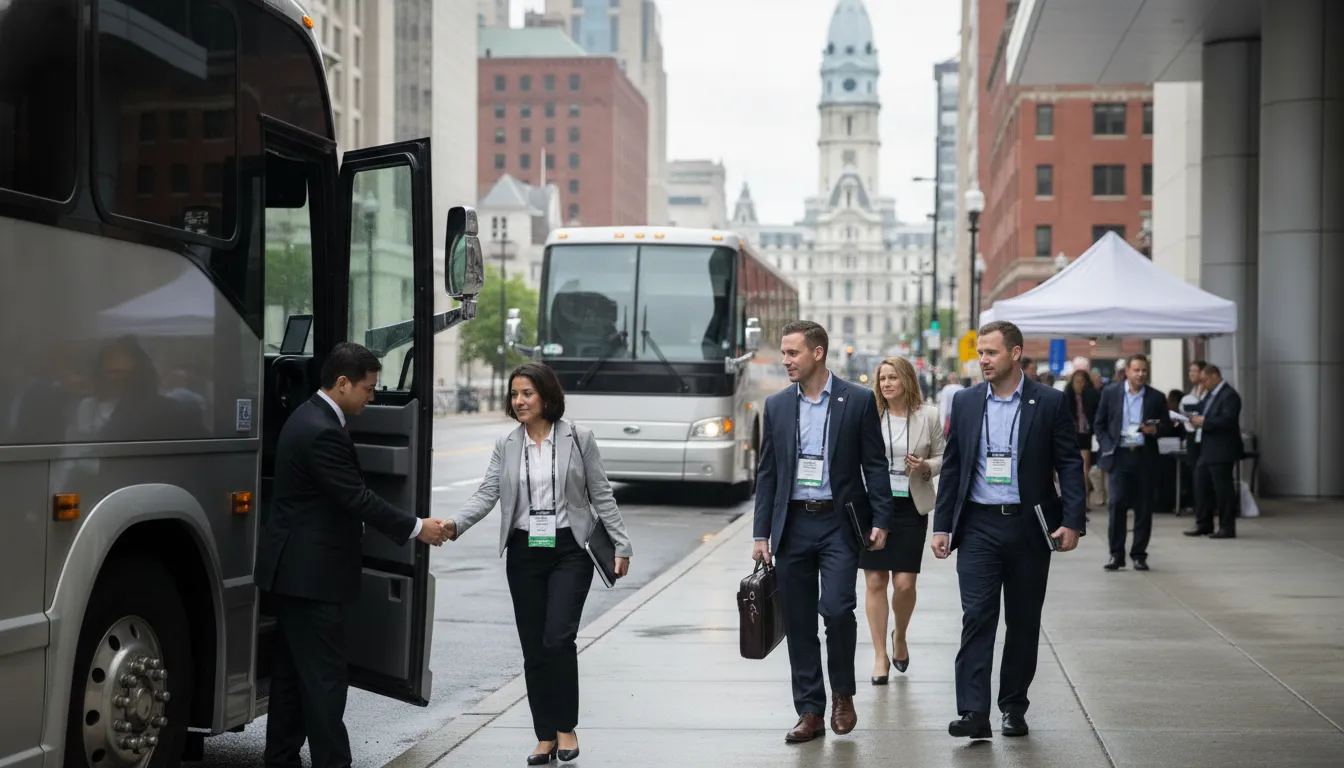
The best transportation companies do far more than send buses to a conference. They build a working shuttle system around the agenda, hotel room blocks, venue access, attendee peaks, and backup plans. In Philadelphia, where a short route can still face loading-zone restrictions or event-day traffic, that advance planning is what keeps a conference moving.
Request a conference transportation quote from Ace Limousine & Airport Service and start planning routes, vehicles, and service times for your event.
This guide explains the operating decisions behind a reliable conference shuttle plan, including route loops, staging, signage, dispatcher coordination, and the details needed for an accurate quote. It is designed for conference planners, corporate travel managers, and venue teams organizing meetings in Philadelphia and the surrounding area within a 60-mile radius.
What Do Transportation Companies Include in a Shuttle Plan?
A conference shuttle plan coordinates how attendees, speakers, staff, and VIPs move between hotels, arrival points, the meeting venue, and related functions. It defines who rides, where they board, when vehicles run, which vehicle sizes fit each stop, and how the transportation team responds when traffic, demand, or schedules change.
Reliable & Professional Transportation for Meetings, Events & Conferences starts with six connected elements:
- Demand: Estimated riders by time window, hotel, and event.
- Routes: Practical loops between approved pickup and drop-off points.
- Fleet: Vehicles matched to passenger volume, luggage, access, and timing.
- Staging: Defined places and times for vehicles to wait, load, and depart.
- Communication: Clear information for attendees, event staff, chauffeurs, and dispatchers.
- Contingencies: Options for traffic, schedule shifts, late flights, and demand spikes.
These pieces should be developed together. A route that looks efficient on a map may fail if the chosen vehicle cannot use the loading area. A generous fleet plan may still create lines if attendees cannot find the correct shuttle. Good planning treats transportation as an operating system, not a list of reservations.
Start With the Conference Schedule and Rider Demand
Before drawing routes, transportation companies translate the conference program into passenger movements by place and time. General sessions create sharp arrival and departure peaks, while breakouts, receptions, dinners, and airport arrivals create smaller flows. This demand picture determines route frequency, vehicle capacity, staffing, and the amount of backup coverage required.
A useful demand worksheet identifies:
- Conference dates and venue hours
- Hotel room blocks and estimated attendees at each property
- Daily first-session and last-session times
- Expected attendance at off-site functions
- Speaker, executive, staff, and accessibility needs
- Arrival and departure patterns through Philadelphia International Airport
- Any luggage that must travel with passengers
Planners should estimate how many people will ride during each 15- to 30-minute peak rather than relying only on total registration. If 400 attendees are registered but only 180 need hotel-to-venue transportation, the route and fleet should be built around those 180 riders. Then the plan should consider how many of them are likely to arrive during the busiest window.
For attendees flying into the city, a separate arrival plan may be more effective than placing airport trips into the conference loop. Ace offers airport transportation with professional uniformed chauffeurs, meet-and-greet service, and coordinated group pickups.
How Are Conference Shuttle Routes Designed?
Conference routes are designed as short, repeatable loops that connect compatible hotels and event locations while accounting for full cycle time, loading access, rider volume, and traffic buffers. The goal is not simply the fewest miles. It is predictable service that moves enough passengers without putting the conference agenda at risk.
Group Stops That Work Well Together
Hotels can be grouped into one loop when their locations, rider volumes, and loading areas support it. Combining too many stops often makes a route fragile. One delayed boarding can affect every property that follows. High-volume hotels may be better served by a dedicated route, while smaller properties may share a loop.
Measure the Full Cycle Time
Cycle time includes travel, loading, unloading, and the time required to return to the starting stop. That full cycle determines how frequently a vehicle can appear. It also reveals whether one vehicle can operate a route or whether the peak requires multiple vehicles.
For example, a route that takes 12 minutes to drive in light traffic is not a 12-minute loop. Loading, unloading, and the return trip can make the operating cycle much longer. Route timing should include a practical buffer rather than depend on ideal conditions.
Separate VIP and General Attendee Movements
Keynote speakers, executives, and board members may have schedules that do not align with the attendee loop. Dedicated black cars, SUVs, or vans can protect those itineraries without interrupting general shuttle service. Ace’s corporate transportation services support personalized travel as well as coordinated pickups for conferences and business meetings.
Plan Alternate Routes Before Service Begins
A written alternate route gives dispatchers and chauffeurs a faster response when traffic or venue access changes. The transportation team should also know which stops can safely handle the assigned vehicles. Ace can coordinate mixed fleets, advance route planning, and alternate route communication for event operations.
Explore Ace’s event transportation service for conference shuttles, executive vehicles, and coordinated event logistics.
Build a Staging and Loading Plan
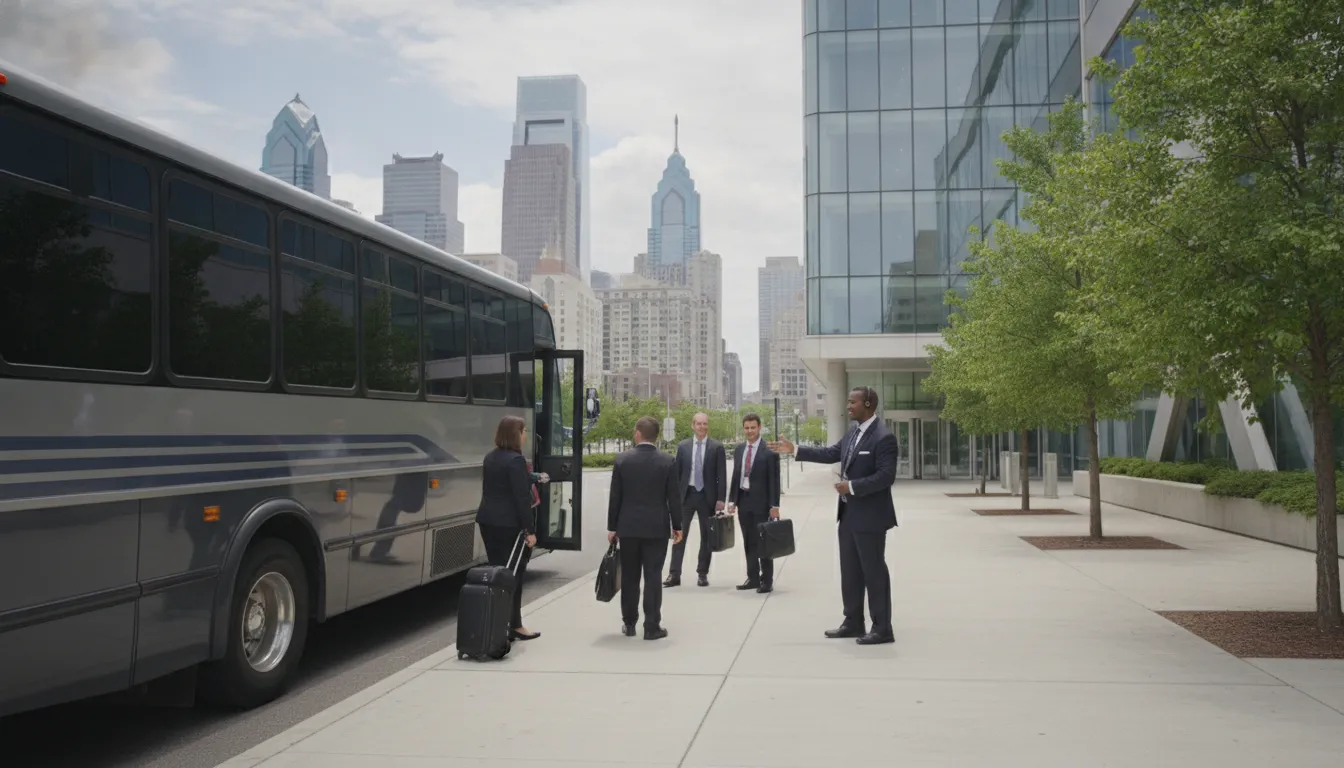
A staging and loading plan controls where vehicles wait, when they enter the pickup zone, how long they load, and where they go next. It prevents early vehicles from creating congestion and late vehicles from leaving attendees waiting. Each location also needs a backup staging or loading point in case access changes.
Each stop plan should answer:
- Where can the assigned vehicle safely load and unload?
- Where will it stage before the scheduled pull-up time?
- Who releases it from staging?
- How long is the loading window?
- Where does the vehicle go after unloading?
- What is the backup location if the primary area is unavailable?
Venue and hotel teams should confirm loading access in advance. Larger vehicles require more space and may not fit every property entrance or narrow approach. That is one reason fleet selection and route design must happen together.
For busy departures, a wave system can reduce crowding. Vehicles are called from staging in a planned order, loaded, and released while the next vehicle moves into place. A transportation captain or greeter can coordinate with dispatch to maintain the flow.
Match the Fleet to Each Route and Passenger Group
A mixed fleet lets planners match each conference movement to its rider volume, luggage, accessibility needs, desired frequency, and loading restrictions. Sedans and SUVs can protect executive schedules, vans can move small teams, and shuttle buses or larger buses can serve concentrated attendee peaks without forcing every trip into one model.
Ace’s fleet includes vehicles ranging from sedans and SUVs to vans, shuttle buses, and larger buses. When evaluating options, planners should consider:
| Movement | Useful fleet approach | Planning priority |
|---|---|---|
| Executives or speakers | Sedan, SUV, or van | Schedule protection and direct routing |
| Small hotel group | Van or shuttle bus | Frequency and loading access |
| Concentrated attendee peak | Shuttle buses or larger buses | Capacity, staging, and loading time |
| Airport arrivals | Mixed vehicles based on arrivals and luggage | Flight timing and baggage capacity |
- Expected riders per departure
- Whether passengers will carry luggage
- Boarding and accessibility needs
- Venue and hotel vehicle restrictions
- Desired service frequency
- Separate requirements for speakers or executives
The highest-capacity vehicle is not automatically the best choice. Two smaller vehicles may provide a better frequency on a short route, while a larger bus may be more efficient during a concentrated departure. A professional transportation company can model the tradeoff between capacity, frequency, and access.
Use Signage and Greeters to Prevent Missed Shuttles
Signage and greeters turn a transportation schedule into instructions attendees can follow. Consistent stop names, visible pickup details, defined route names, and on-site staff reduce confusion and missed departures. At busy stops, greeters can organize lines, identify the right vehicle, answer questions, and report demand changes to dispatch.
Attendee instructions should use consistent stop names across the conference app, email, hotel signs, and printed agenda. Avoid vague directions such as “outside the hotel.” Name the entrance or loading area and include the first departure, last departure, expected frequency, and support contact.
At high-volume stops, greeters can answer questions, form orderly lines, identify the correct vehicle, and report demand to dispatch. Ace can support professional greeters with signage and direct dispatch communication. These details are especially useful during the first morning, when attendees are still learning the system.
Why Live Dispatcher Coordination Matters
Live dispatch gives a conference transportation plan a central decision-making layer when sessions run late, rider demand shifts, a vehicle encounters congestion, or access changes. Dispatchers connect the event lead, chauffeurs, staging staff, and greeters so one adjustment can be communicated quickly without asking attendees to solve the problem themselves.
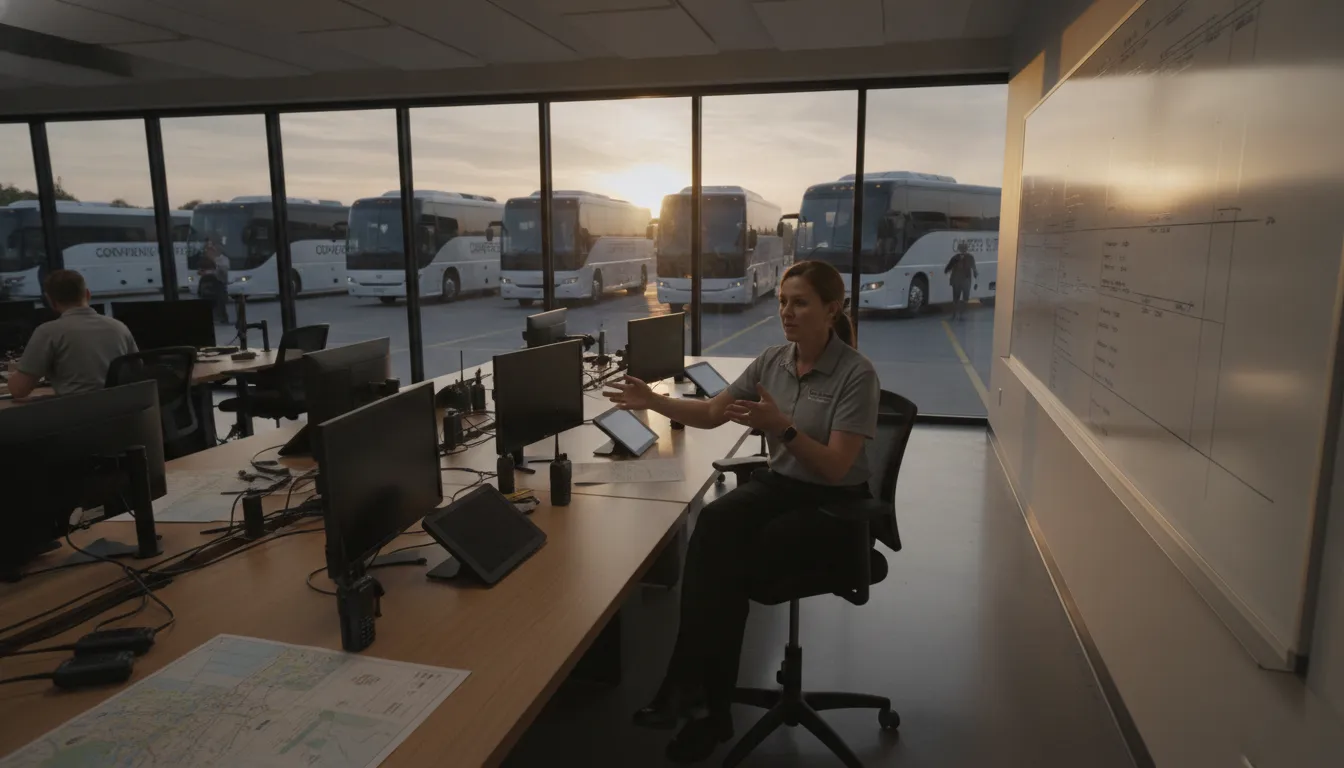
Before service begins, the dispatcher should have the master schedule, route sheets, vehicle assignments, chauffeur contacts, staging locations, and event-team contacts. During service, the event transportation lead and dispatcher should use a clear communication path for changes.
Useful operational updates include:
- Actual passenger counts by departure
- Vehicles released from staging
- Changes to meeting end times
- Traffic or loading-zone issues
- Requests for an additional vehicle
- Last-rider confirmation before closing a route
Ace provides 24/7 live support and professional chauffeurs, along with event transportation coordination. That live structure helps planners respond to changing conditions without asking attendees to solve transportation problems themselves.
What Information Is Needed for a Conference Shuttle Quote?
A useful conference shuttle quote requires dates, venue and hotel addresses, riders by location, arrival and departure windows, airport or off-site movements, vehicle preferences, and special requirements. Transportation companies also need loading restrictions and an on-site decision maker so the proposal reflects actual operating hours, fleet needs, staffing, and coordination.
Prepare the following details:
- Event date or dates
- Venue and hotel addresses
- Estimated riders at each location
- Required arrival and departure windows
- Airport transfer needs
- Off-site event locations and times
- Preferred vehicle types, if known
- Luggage, accessibility, speaker, or executive requirements
- On-site contact and decision maker
- Any known loading restrictions
Ask whether the proposed service includes on-site coordination, greeters, signage, staging support, and a dispatch contact. Review the assumptions behind vehicle counts and operating hours. If the conference agenda is still changing, identify which dates or details must be finalized before service.
Get a quote from Ace for a Philadelphia conference shuttle plan built around your hotels, agenda, and attendee flow.
A Practical Conference Transportation Timeline
A practical conference transportation timeline begins with the movement plan, then progresses through routes and fleet assumptions, loading access, staffing, attendee communication, live operation, and post-event review. Starting early gives planners time to test assumptions and publish stable instructions while preserving room to adjust as registration and the agenda develop.
- Define the movement plan: Collect venue, hotel, agenda, airport, and attendee information.
- Develop routes and fleet assumptions: Group logical stops, estimate cycle times, and select suitable vehicles.
- Confirm access and staging: Coordinate loading points and vehicle restrictions with each property.
- Finalize schedules and staffing: Set service windows, dispatcher procedures, greeter positions, and contingency options.
- Publish attendee instructions: Use consistent stop names, pickup details, and service times.
- Operate and adjust: Track demand, communicate changes, and use live dispatch to protect the schedule.
- Review the service: Capture rider counts and operational notes to improve the next event.
A dedicated planning checklist can help teams organize these details. See Ace’s Philadelphia corporate transportation planning checklist for another useful preparation resource.
For planners coordinating fan movement around major Philadelphia games or venue schedules, Ace also outlines related considerations in its sports event transportation guide.
Conference Shuttle Planning FAQs
Conference shuttle planning questions usually focus on fleet size, route design, staging, airport pickups, and attendee communication. The right answers depend on peak demand and operating conditions rather than registration alone. These concise answers give planners a starting point before they request a route-by-route proposal.
How many shuttle buses does a conference need?
The number depends on peak riders, vehicle capacity, route cycle time, desired frequency, loading time, and venue access. The total attendee count alone is not enough. A transportation company should calculate vehicles route by route and time window by time window.
Should every conference hotel have its own shuttle route?
Not always. A high-volume hotel may benefit from a dedicated route, while nearby lower-volume hotels may share a loop. The best design balances short cycle times, easy attendee instructions, and sufficient capacity.
What is the difference between staging and loading?
Loading is where attendees board or exit a vehicle. Staging is where vehicles wait before they are called to the loading point. Separating the two helps prevent congestion and keeps departures organized.
Can conference transportation include airport pickups?
Yes. Airport transfers can be coordinated separately from hotel-to-venue shuttle loops. Share flight schedules, group sizes, luggage needs, and meet-and-greet requirements when requesting the quote.
What should attendees receive before the event?
Attendees should receive the pickup location, route or hotel name, first and last departure times, expected service frequency, and a support contact. Use the same wording in every channel so instructions are easy to follow.
Plan a More Reliable Philadelphia Conference Shuttle
Reliable conference transportation connects rider demand, route loops, fleet selection, staging, signage, and live dispatch in one operating plan. When transportation companies coordinate those elements before service begins, attendees receive clear directions and dependable rides while event teams gain practical options for responding to schedule changes.
Ace Limousine & Airport Service provides reliable and professional transportation for meetings, events, and conferences in Philadelphia and the surrounding area within a 60-mile radius. With a broad fleet, professional chauffeurs, airport and corporate transportation capabilities, and 24/7 live support, Ace can help turn your agenda into a coordinated transportation plan.
Request your conference transportation quote to begin planning service for your next Philadelphia-area meeting or conference.