
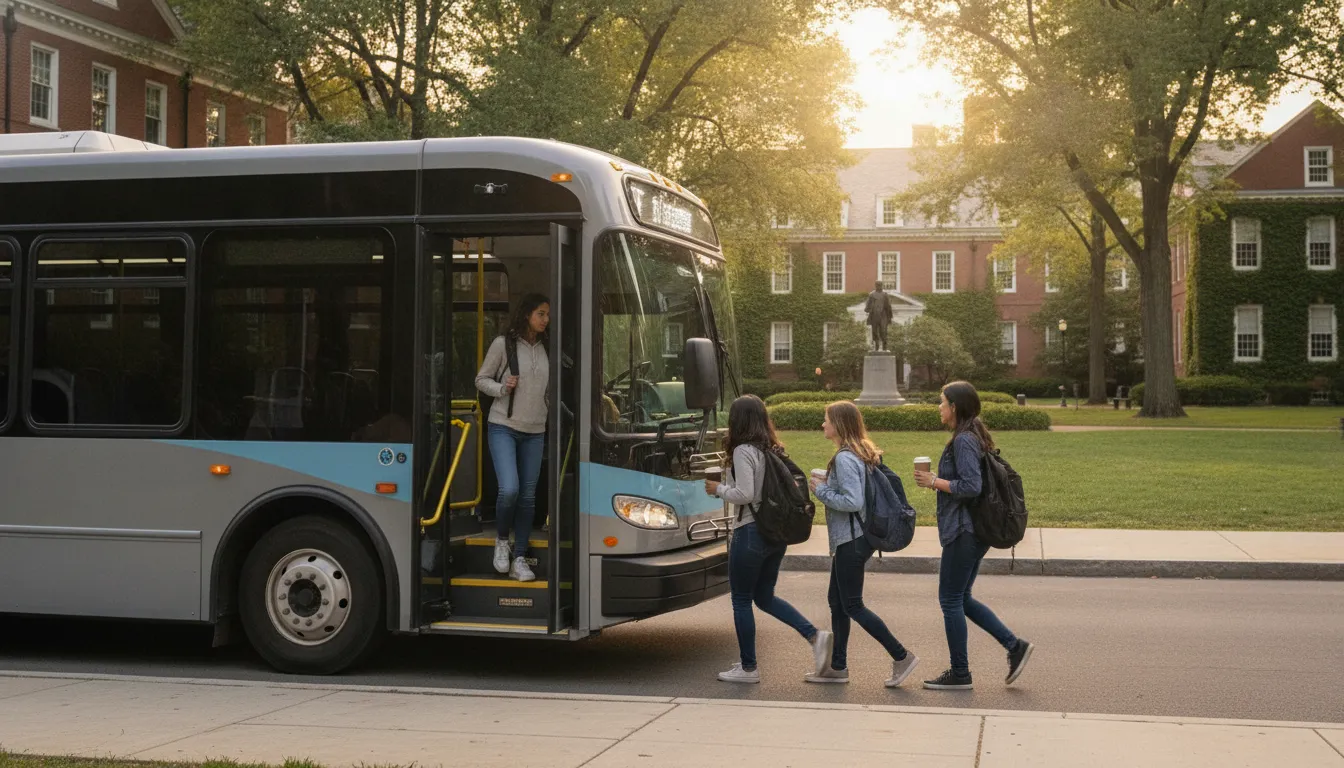
For a college student, a shuttle is more than a ride between buildings. It can determine whether they reach an early class on time, return safely from an evening program, or connect with off-campus housing without relying on a personal vehicle. That makes route planning, dependable schedules, and professional drivers part of the campus experience.
Get a campus shuttle quote for your Philadelphia university from a provider that plans routes around safety, punctuality, and accessibility.
Campus shuttle services Philadelphia help universities move students between dorms, academic buildings, parking areas, and nearby housing with a transportation plan built around safety, punctuality, accessibility, and clear communication.
The strongest programs treat each route as an academic operations responsibility, not an occasional transportation request. They define pickup points, plan for evening demand and weather, communicate changes promptly, and match vehicles to the number and needs of riders. The first priority is creating a system students can trust when they are traveling across campus or heading home after dark.
How Campus Shuttle Services in Philadelphia Keep Students Safe
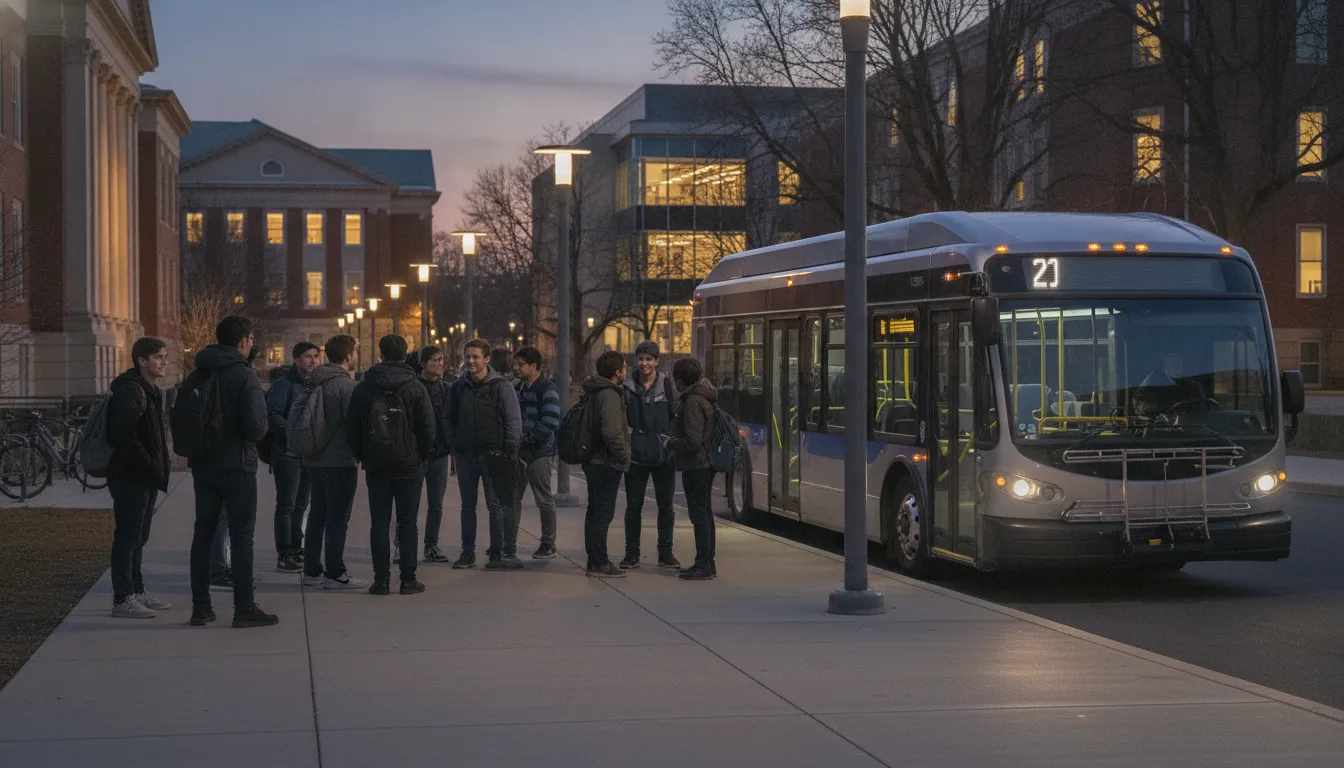
Safety depends on more than putting a vehicle on the road. A well-run campus shuttle program combines late-night coverage, clear passenger expectations, careful pickup procedures, and contingency planning for periods when demand rises. These details help students move between residence halls, academic buildings, and other approved locations without relying on an isolated walk or an improvised ride.
Late-night rides need a visible safety process
Late-night transportation should give students a dependable alternative when classes, study sessions, or campus activities end after dark. Loyola University Chicago’s 8-RIDE program, for example, lists regular service from 6:30 p.m. to 2:30 a.m. Its published guidance says the driver waits for a rider to get safely inside the drop-off location. That simple step keeps the service focused on the final part of the trip, not just the vehicle movement between points. Loyola also tells riders to remain alert, wait in a safe location, and contact Campus Safety if they notice something suspicious. Read Loyola’s 8-RIDE safety guidance.
Universities planning a similar service should define the service boundary, approved pickup points, dispatch process, and escalation path before the first route begins. Clear instructions reduce confusion for students and give drivers and campus security a shared operating standard. For campuses or academic events in the region, reliable shuttle services in Philadelphia can support a coordinated transportation plan.
Passenger rules protect riders and drivers
Safety policies work best when they are specific and easy to follow. Stevens Institute of Technology’s shuttle guidelines prohibit passengers from standing while the vehicle is moving and restrict open or unsecured food and drink containers. The rules also prohibit behavior that interferes with a driver’s safe operation, including noise that creates a distraction. These expectations protect passengers while allowing the driver to keep attention on traffic, pedestrians, and campus access points. See the Stevens shuttle guidelines.
Campus police or designated security personnel should be prepared to enforce those rules consistently. Riders should board without crowding, remain seated or properly secured when required, keep aisles clear, and report concerns through the stated campus channel. A calm, distraction-free ride is safer for everyone than treating the shuttle as an extension of a social gathering.
Weather and busy periods require advance planning
Demand often increases during rain, snow, extreme temperatures, and other uncomfortable conditions. Loyola notes that 8-RIDE is busiest during inclement weather and asks riders to plan accordingly. A campus operator can respond by monitoring requests, communicating expected wait times, staging vehicles near high-demand locations, and reminding students where to wait safely. Building that flexibility into the operating plan helps preserve service quality when students need transportation most.
What Philadelphia Shuttle Programs Can Teach Universities
Philadelphia universities show that effective shuttle planning starts with a clear service purpose, defined routes, and operating rules. Temple maintains dedicated campus shuttle operations and publishes a direct Shuttle Operations contact. Drexel provides free service across three Philadelphia campuses, including the Dragon Route and Powelton/Spring Garden route. Penn combines an evening safety shuttle, operating Monday through Friday from 4 p.m. to midnight, with a Pennovation route running weekdays from 8 a.m. to 6 p.m. Drexel’s route schedules and Penn Transit’s service details illustrate how different campus needs shape the schedule.
The University City District’s LUCY shuttle offers another useful model: free rides for students every 30 minutes on weekdays from 6 a.m. to 9 p.m. These examples do not prescribe one answer. They give administrators a practical framework for deciding whether internal resources or a contracted transportation partner best fits the campus.
| Factor | In-house program | Private provider partner |
|---|---|---|
| Fleet flexibility | Vehicles and routes are planned around recurring campus demand. This can work well when ridership and destinations are stable. | A provider can match vehicle size to the assignment, from a 16- to 20-passenger ADA minibus or 24-passenger minibus to a 56-passenger motorcoach, as described in campus fleet guidance. |
| Coverage hours | Universities set hours around classes, residence halls, safety needs, and seasonal schedules. Penn’s separate daytime and evening services demonstrate this approach. | Recurring routes and event-based coverage can be adjusted without requiring the university to maintain every vehicle year-round. |
| ADA accessibility | Accessibility depends on the university’s available fleet, maintenance program, and dispatch procedures. | Contract specifications can require ADA-accessible vehicles, including accessible minibus options, before service begins. |
| Staffing and driver training | Operations remain within the university’s hiring, supervision, safety, and feedback systems. Published passenger rules help protect riders and drivers. | The contract can define driver qualifications, training, reporting, appearance, and escalation procedures, while university staff retain oversight of service standards. |
| Cost structure | Budgeting includes payroll, fleet ownership or leases, insurance, maintenance, fuel, dispatch, and replacement planning. | Pricing is typically organized around vehicles, hours, mileage, routes, and service requirements, creating a clearer project or recurring-service budget. |
The strongest choice depends on control, scale, and service variability. A university with predictable daily demand may favor internal operations. A campus expanding off-campus coverage, adding conference transportation, or needing accessible capacity quickly may benefit from a professional partner.
Why Punctuality and Coverage Matter for Student Satisfaction
A shuttle that arrives predictably does more than move students between locations. It helps them plan classes, work shifts, meals, study time, and evening activities without building every decision around transportation uncertainty. That reliability becomes especially important when service capacity is limited. Loyola University Chicago advises riders to allow enough time to reach their destination. A practical reminder that clear schedules and realistic pickup windows are part of a satisfactory experience. Its 8-RIDE guidance also asks passengers to enter exact pickup and drop-off addresses, because precise location details help drivers stay on schedule.
Coverage should follow student routines
Useful coverage cannot stop at the main academic quad. Many students live in nearby apartments, residences, and other off-campus housing, so a well-planned route should connect those areas with classrooms, libraries, dining facilities, and residence halls. Extending service to the places students actually use reduces the need to walk long distances alone, arrange separate rides, or bring a personal vehicle onto campus. It also makes the transportation program more equitable for students whose housing is outside the core campus area.
That broader reach can support campus operations at the same time. When more students have a dependable shared option, fewer individual vehicles need to enter or circulate through campus. Shuttles can therefore help reduce congestion near academic buildings and housing while giving riders a consistent way to reach their destinations. Universities and organizations evaluating professional shuttle transportation services should map routes around actual demand rather than choosing stops for convenience alone.
Discuss your campus routes with the reliable shuttle services in Philadelphia team and get transportation built around student needs.
Technology and feedback keep service responsive
On-demand booking and tracking tools can make a transportation program easier to use and easier to manage. Loyola identifies the TripShot app as an option for booking a ride, showing how mobile scheduling can improve visibility for riders and help operations respond more efficiently. Students can see where to request service, while dispatch teams gain better information about demand and trip status.
Technology is only one part of quality control. A feedback loop should capture the route, pickup and drop-off points, vehicle, and driver details when a rider reports a problem or recognizes good service. Loyola specifically encourages transportation feedback and notes that driver or vehicle information helps its office review reports. Reviewing that information can reveal recurring late stops, confusing locations, or coverage gaps, allowing the program to adjust routes, communication, and staffing before dissatisfaction becomes a larger issue.
How Private Shuttle Providers Support Campus Operations
A campus transportation plan has to work around class schedules, residence halls, accessibility needs, event traffic, and last-minute changes. A private provider gives university administrators an operational partner that can plan routes. Assign the right vehicles, and adjust service without requiring the school to manage every transportation detail internally. For Philadelphia-area campuses and institutions within a 60-mile radius, Ace Limousine & Airport Service provides reliable and professional transportation for meetings, events, and conferences.
The right provider should be able to support both routine movement and high-demand periods. Campus transportation may need to expand for commencement, orientation week, academic conferences, or a study-weekend surge, then return to a smaller recurring schedule. A scalable plan keeps service practical without forcing every event into the same vehicle or staffing model.
Match the fleet to the assignment
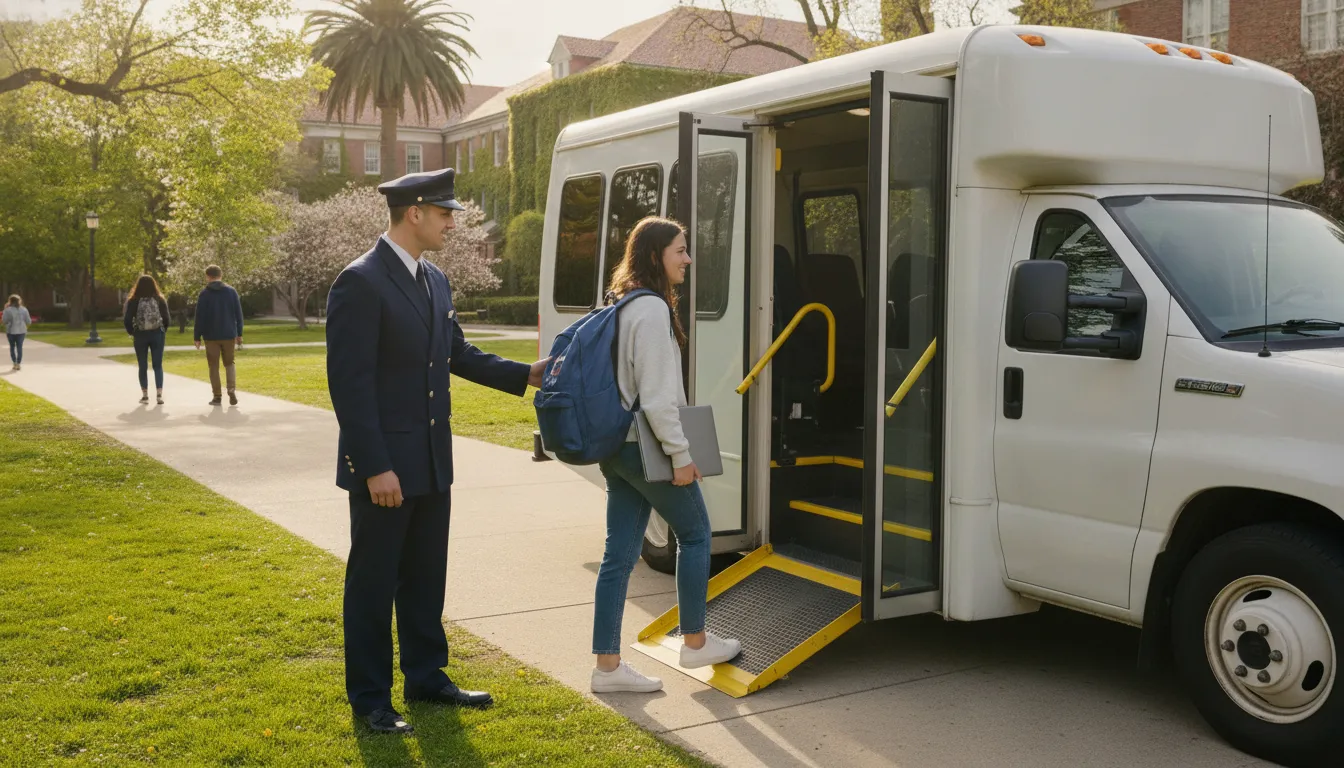
Fleet flexibility matters when passenger counts change throughout the academic year. Campus shuttle programs commonly use smaller accessible vehicles for circulation between buildings and housing areas, while larger vehicles support conferences, commencements, and coordinated multi-stop movements. Lenzner Travel identifies 16- to 20-passenger ADA minibuses, 24-passenger minibuses, and 56-passenger motorcoaches as examples of fleet options for campus transportation. Review the referenced campus fleet examples when comparing capacity and accessibility requirements.
A provider should also explain how ADA-accessible service will be scheduled, dispatched, and integrated with the main route plan. That makes accessibility part of the operation rather than an afterthought.
Build a launch plan before the first pickup
Administrators can use the following sequence to turn a transportation need into a workable service plan:
- Assess routes and demand. Map academic buildings, residence halls, transit hubs, off-campus housing, event venues, and the times when demand is highest. Confirm pickup addresses and destination details before service is scheduled.
- Choose fleet size and accessibility options. Match vehicle capacity to typical ridership, peak surges, luggage needs, and ADA requirements. Plan for separate vehicle assignments when one route serves a recurring population and another supports a large event.
- Set safety, driver, and insurance standards. Require professional CDL-trained drivers, background-checked staff, maintained vehicles, clear passenger rules, and documented insurance and licensing requirements.
- Schedule recurring service and peak coverage. Establish regular runs, standby capacity, event transportation windows, and an escalation process for weather, traffic, or schedule changes.
- Measure satisfaction and adjust. Review on-time performance, ridership, accessibility feedback, missed pickups, and student or staff comments. Use those findings to refine routes, frequencies, and vehicle assignments.
A live human dispatch team is especially valuable when a campus schedule changes after hours. Ace supports service ranging from 2 to 10,000+ passengers with 24/7 human support, allowing administrators to reach a real transportation professional when conditions shift. Universities also planning corporate transportation services for meetings or conferences can coordinate those movements with the same professional operations team.
Ready to build a dependable campus shuttle plan? Talk to our Philadelphia shuttle team about your routes and schedule today.
Frequently Asked Questions
Why are campus shuttles important for student safety in Philadelphia?
A scheduled shuttle gives students a dependable option between residence halls, academic buildings, and off-campus stops, especially after dark or during poor weather. Strong programs also use practical safeguards, such as passenger rules and drivers who wait until riders are safely inside their destination. Loyola’s 8-RIDE program describes both late-night transportation and this driver-wait practice: Loyola Campus Transportation.
How can a university improve shuttle punctuality?
Start with clearly defined routes, pickup points, service hours, and contingency plans for peak periods or inclement weather. Give riders precise pickup and drop-off instructions, then use scheduling or tracking technology where appropriate. Loyola specifically encourages TripShot for booking and advises riders to allow enough time when capacity is limited, which supports realistic scheduling: 8-RIDE guidance.
Do Philadelphia colleges provide shuttle service for off-campus housing?
Some colleges operate routes that connect multiple campuses and nearby residential areas, while others set service boundaries around their core campus community. Availability depends on the institution, housing locations, ridership, and operating hours. A university should map the stops students actually need before deciding whether its own program or a contracted provider is the better fit.
What does university shuttle service cost?
There is no universal price. An in-house program may be funded through the university’s transportation budget or student fees. While a private contract is typically shaped by vehicle size, ADA requirements, route mileage, service hours, staffing, and frequency. Request a scope-based quote using the actual routes and schedule rather than relying on a generic per-ride estimate.
Ready to Plan Reliable Campus Shuttle Service?
A well-planned shuttle program can help your university coordinate student movement between campus locations and off-campus housing with greater consistency. To discuss your routes, schedule, vehicle needs, and service area, request a quote for professional campus shuttle service from Ace Limousine & Airport Service.