

Transportation for a government agency or military installation requires more than a vehicle arriving on time. Coordinators must account for passenger movement, privacy, access procedures, schedule changes, and clear communication across Philadelphia and nearby facilities. The right provider brings the same discipline to a single airport pickup that it brings to a multi-vehicle movement.
Request a Quote for Secure Government and Military Transportation in Philadelphia
Professional government and military transportation services combine vetted chauffeurs, appropriately matched vehicles, and secure operating practices. Dependable dispatch support covers agency meetings, training sessions, conferences, airport transfers, and facility-to-facility movements.
A capable local provider should also understand the practical demands behind each movement. That includes confirming passenger counts, planning precise pickup windows, coordinating approved access points, and maintaining human oversight when plans change. Ace Limousine brings more than 30 years of experience, PAX-certified and background-checked chauffeurs, a broad fleet, and 24/7 live dispatch to this work. The right service model begins by matching transportation to the agency’s operational purpose, movement pattern, and compliance expectations.
How Philadelphia Agencies Use Government and Military Transportation Services
Philadelphia agencies often coordinate transportation across several locations, schedules, and passenger groups. A dependable provider helps administrators keep official travel organized while maintaining professional standards for staff, visitors, and mission personnel. Ace Limousine supports transportation planning throughout Philadelphia and surrounding communities within a 60-mile radius.
Official travel, meetings, and training events
Agency meetings, briefings, conferences, training sessions, and drills require more than a vehicle arriving at a curb. Coordinators must align pickup windows, passenger manifests, venue access, and return movements. A dedicated dispatch team can manage these details while chauffeurs maintain punctual, discreet service for executives, staff, instructors, and attendees.
For official travel that involves multiple vehicles or changing schedules, government and military transportation services provide a focused starting point. Agencies can also apply the scheduling and billing discipline used in corporate transportation services when coordinating recurring meetings or hosted delegations.
Airport arrivals, departures, and facility transfers
Philadelphia International Airport is a common arrival and departure point for agency personnel, contractors, and official visitors. Prearranged airport transportation in Philadelphia reduces uncertainty around terminal pickups, flight changes, luggage, and onward travel. Dispatchers can monitor timing and communicate updates when an itinerary changes.

Facility-to-facility transfers are another practical use. A team may need transportation between an airport, office, training site, government facility, or military installation. Building the route in advance helps protect meeting schedules and reduces the administrative burden of coordinating individual vehicles. Early confirmation of gate access, staging areas, and receiving contacts prevents the delays that commonly surface when a vehicle arrives at a controlled facility without prior coordination.
Public programs and recurring shuttle loops
Agencies may also need transportation for community events, public programs, conferences, and formal civic activities. The objective is dependable movement for an approved program, not recreational group travel. Clear pickup points, vehicle assignments, and return windows make the service easier for participants and coordinators to use.
For ongoing operations, recurring shuttle loops can connect facilities at set times throughout the day. A provider can document the route, establish dispatch contacts, and adjust vehicle assignments as passenger demand changes. This approach is useful when personnel, visitors, or program participants need consistent transportation between several Philadelphia-area locations.
What Compliance and Security Standards Apply to Government Transportation?
Government transportation is not managed like an ordinary one-time vehicle booking. Federal agencies operate within procurement rules, documentation requirements, and security procedures that affect how a movement is planned and delivered. A provider should understand those expectations before the vehicle arrives.
Federal and defense transportation rules
FAR Part 47 prescribes policies and procedures for applying transportation and transportation-related services during federal contract performance. For agencies planning official travel, facility-to-facility movement, training support, or airport transfers, that framework reinforces the need for clear scope, accountable performance, and organized records.
Defense-related movements can involve additional requirements under DFARS Part 247. The regulation addresses transportation and transportation-related services within the Department of Defense. It also identifies the DD Form 1384 as a Transportation Control and Movement Document. That detail matters when a movement requires coordinated documentation, not simply a reservation confirmation.
DFARS Part 247 also addresses intra-city and intra-area movement. For Philadelphia-area agencies, that can be relevant when personnel, equipment, or official groups need coordinated movement between local facilities, airports, offices, and designated meeting locations.
How procurement affects provider selection
Agencies commonly use structured purchasing channels, including the GSA Multiple Award Schedule, to acquire approved products and services. A schedule alone does not replace project-level due diligence. It does provide a procurement context that favors vendors with organized documentation and a clear understanding of government requirements.
When evaluating a transportation partner, request evidence rather than relying on broad assurances. Confirm the company’s applicable registrations, insurance coverage, driver screening and credentialing practices, vehicle records, and ability to maintain trip documentation. Ask who owns the movement plan, how changes are recorded, and how dispatch communicates when schedules or access conditions change.
Security also depends on disciplined execution. The right provider confirms passenger details, pickup instructions, access points, contact responsibilities, and escalation procedures before service begins. For recurring agency routes or sensitive movements, consistent records and a defined point of contact make each subsequent trip easier to audit and coordinate.
In practical terms, compliance is a service capability. Choose a provider that can demonstrate reliable documentation, verified operating standards, and controlled communication across the full Philadelphia-area movement.
Matching the Right Vehicles to Secure Group Movements
Vehicle selection should follow the movement plan, not the other way around. Passenger count, luggage, privacy, loading conditions, and the distance between facilities all affect the right fit. For agencies and military coordinators in the Philadelphia area, a matched fleet plan can keep officials, staff, or service members together without adding unnecessary transfers.
| Vehicle | Typical capacity | Best for | Notes |
|---|---|---|---|
| Executive sedan or SUV | 1 to 6 passengers | Small delegations, individual officials, and confidential transfers | Provides a private, professional environment for point-to-point travel and airport movements. |
| Sprinter van | 12 to 14 passengers | Small teams traveling with luggage or equipment | Balances group efficiency with easier access to office buildings, training sites, and controlled entrances. |
| Mini-coach or shuttle bus | 25 to 35 passengers | Staff groups, agency meetings, and training movements | Useful when one vehicle is preferred, but a full-size coach would be excessive for the group. |
| 56-passenger coach bus | Up to 56 passengers | Large units, training groups, and coordinated facility transfers | A 56-passenger coach can move a platoon with one duffel bag or rucksack per soldier. |
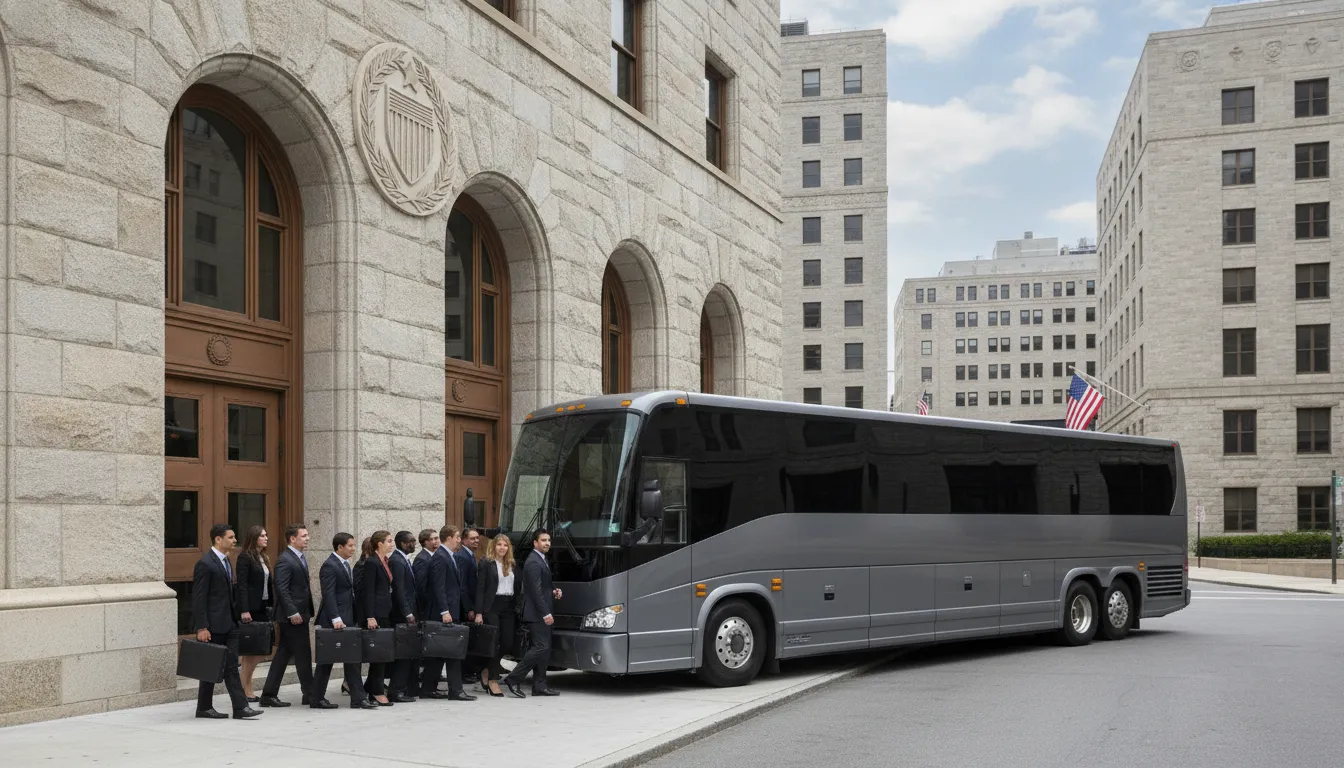
The table provides a starting point, but the operating details matter just as much as seating capacity. A coordinator should account for baggage volume, mobility needs, pickup sequencing, restricted access points, and whether personnel must remain together throughout the movement. Those details may support one large coach, several smaller vehicles, or a blended plan using sedans for officials and buses for the broader unit.
A mixed fleet also helps reduce unnecessary vehicle changes. For example, an executive SUV can handle an individual official while a Sprinter or coach moves the supporting team on the same schedule. Review Ace’s luxury limo and bus fleet when comparing vehicle options for a planned meeting, conference, training movement, or airport transfer.
Final assignments should be confirmed against the itinerary and access requirements. Ace’s 24/7 live dispatch support helps maintain communication when schedules change, arrivals shift, or a movement requires real-time coordination.
How Do You Plan a Secure Agency or Military Movement?
Well-planned movement begins before the first vehicle arrives. Agency administrators and military transportation coordinators should document operational details early, then share one clear plan with the transportation provider and receiving facility. This reduces avoidable delays while preserving flexibility for access changes, schedule shifts, and passenger needs.
- Define the passenger and access requirements. Confirm the total passenger count, names or groups when appropriate, pickup and drop-off locations, luggage volume, mobility needs, and any access restrictions. Identify whether passengers need credentials, escorts, specific loading areas, or facility approvals. A precise manifest helps the dispatch team assign the right vehicles and avoid confusion at controlled entrances.
- Build a schedule with security buffers. Set firm departure, arrival, and return times, then allow additional time for credential checks, screening, checkpoints, loading, and walking from the vehicle to the destination. Do not schedule arrival for the exact start of a briefing or meeting. A realistic buffer protects the mission when a checkpoint takes longer than expected or a passenger requires assistance.
- Confirm routes, parking, and entry procedures. Coordinate with the venue, agency office, or base transportation contact before travel day. Verify the approved approach, staging location, vehicle clearance, driver instructions, parking permissions, and facility entry point. Ask who will meet the vehicle and how last-minute route or access changes will be communicated. These details matter especially for movements involving meetings, events, and conferences at controlled facilities.
- Match vehicles to group size and luggage. Choose transportation based on passenger count, equipment, luggage, comfort, and the site layout. Executive sedans or SUVs may suit small teams, while Sprinter-style vehicles, minibuses, or full-size coaches can support larger delegations. Avoid filling a vehicle to its practical limit when luggage, protective equipment, or schedule flexibility requires additional space.
- Use a 24/7 dispatch team for changes. Select a provider with live human dispatch rather than relying on an unattended booking channel. Confirm the dispatch contact before departure and establish who can approve changes. A 24/7 team can coordinate updated pickup times, vehicle substitutions, passenger additions, or route instructions while keeping everyone informed.
After the plan is confirmed, circulate the final schedule and contact details to authorized stakeholders. Keep the working plan current, but limit operational information to the people who need it. Reserve trip records, manifests, and route details in a consistent format so the next movement starts from an established baseline.
What Should You Look for in a Government Transportation Partner?
Agency administrators and base transportation coordinators should vet a provider as carefully as they vet any operational vendor. A polished vehicle is not enough. The right partner can document its qualifications, communicate continuously, and adapt when schedules or passenger counts change.
Verify registration, insurance, and credentials
Ask whether the company maintains a current federal contractor profile on SAM.gov. Registration alone does not prove performance, but it gives procurement teams a concrete record to review. Confirm the legal business name, active status, points of contact, and any information required by your purchasing process.
Request a current certificate of insurance before the first movement. Strong liability coverage protects the agency, passengers, and provider when a transportation plan involves multiple vehicles or high-value schedules. Ace Limousine carries $5 million in liability insurance, giving coordinators a clear coverage figure to evaluate during vendor review.
Driver standards deserve the same attention. Ask how chauffeurs are screened, trained, and supervised. Ace chauffeurs are background-checked and PAX certified. Review the company’s PAX-certified chauffeurs information to understand the credential and the provider’s approach to professional passenger service.
Test the operating model before a mission
A government or military movement may change after the original itinerary is approved. Choose a provider with 24/7 live dispatch, not an answering service that only records a message. Confirm who will communicate with your coordinator, how vehicles are tracked, and how the team handles delays, access changes, substitutions, or last-minute passenger updates.
Ask for documented experience with institutional clients. Useful evidence includes references, sample operating procedures, safety documentation, and a clear explanation of how the provider coordinates airport transfers, meetings, conferences, training movements, or facility-to-facility routes. Federal transportation work may involve requirements under FAR Part 47, while defense-related transportation can involve DFARS Part 247. Your procurement or contracting office should determine which provisions apply.
Confirm recurring-route flexibility
If personnel need regular shuttle or recurring route service, discuss rates, backup vehicles, driver continuity, reporting, and schedule changes in advance. Also review the broader military travel ecosystem, including the Military OneSource PCS customer-service contacts. A transportation partner that understands recurring operations can help coordinators maintain dependable service across the Philadelphia area and surrounding communities. Agencies evaluating long-term partnerships can review Ace’s background and service history on the About Ace Limousine page before reaching out.
How Do Providers Handle Sensitive Movements and Security Protocols?
Agencies and installations sometimes coordinate movements that involve heightened privacy, controlled access, or restricted information. Professional ground transportation providers support these movements by managing who knows what, when vehicle details are shared, and how changes are authorized. The goal is dependable service without adding operational noise.
For sensitive movements, the provider should confirm a single authorized coordinator, limit trip details to confirmed staff. And avoid publishing route or timing information to anyone outside the working plan. Chauffeurs should be briefed on the pickup process, approved access points, and the appropriate level of discretion. Background-checked and PAX-certified chauffeurs give coordinators a documented screening baseline to rely on.
Vehicle selection also supports discretion. Executive sedans and SUVs provide a private cabin for individual officials, while a matched coach keeps a larger unit together without drawing attention to the movement. Dispatch records are kept complete and centralized so the coordinator can audit any trip without chasing separate notes from multiple people.
Most important is a clear escalation path. When an access point changes, a checkpoint delays the schedule, or a passenger needs different support. One dispatch contact should be able to confirm the change, update the vehicle plan, and notify the coordinator. That controlled communication loop is what separates a secure movement from a routine reservation.
Ready to Plan a Secure Agency or Military Movement? Start with Ace Limousine
Frequently Asked Questions
What counts as government and military transportation services?
These services support official passenger movements for agencies, military installations, and approved contractors. Common needs include airport transfers, training sessions, meetings, facility-to-facility travel, and scheduled group movements within Philadelphia and the surrounding area.
What qualifications should a transportation provider have?
Start with verified insurance, background-checked and properly certified chauffeurs, dependable dispatch coverage, and a documented record of punctual service. Providers should also understand agency access procedures, passenger manifests, staging requirements, and contract-specific documentation. Federal transportation contracting follows policies in FAR Part 47, while defense transportation requirements may fall under DFARS Part 247: FAR Part 47 and DFARS Part 247.
How far in advance should an agency book transportation?
Book as early as possible when the movement involves multiple vehicles, restricted access points, fixed arrival times, or recurring schedules. Early planning gives the provider time to confirm vehicle capacity, chauffeur assignments, routing, staging locations, and facility instructions. Short-notice requests may still be possible when fleet and dispatch availability allow.
Can a provider support recurring routes or ongoing agency travel?
Yes. A transportation partner can establish repeat schedules for regular airport runs, inter-facility travel, training programs, meetings, or other official movements. Share passenger counts, pickup windows, access requirements, and billing instructions so dispatch can build a consistent operating plan and adjust it when mission needs change.
Ready to Plan Secure Transportation in Philadelphia?
A dependable transportation plan can help agency administrators and military coordinators align passenger movement, schedules, and access requirements. Request a quote for secure government and military transportation in the Philadelphia area through the Ace Limousine contact page. You can also call the reservation team at 610-494-6545 to discuss your route, vehicle needs, and service schedule.